Four acts stand between a draw and a legal show
Draw, discard, complete two lives, then show. Skip the third act and the fourth act is not a near-miss. In standard 13-card teaching an invalid declaration is a failed show.
This is Indian-rummy procedure. It is not a jackpotbet button tour. Product labels after login can rename a pile. They do not rewrite the pure-sequence test.
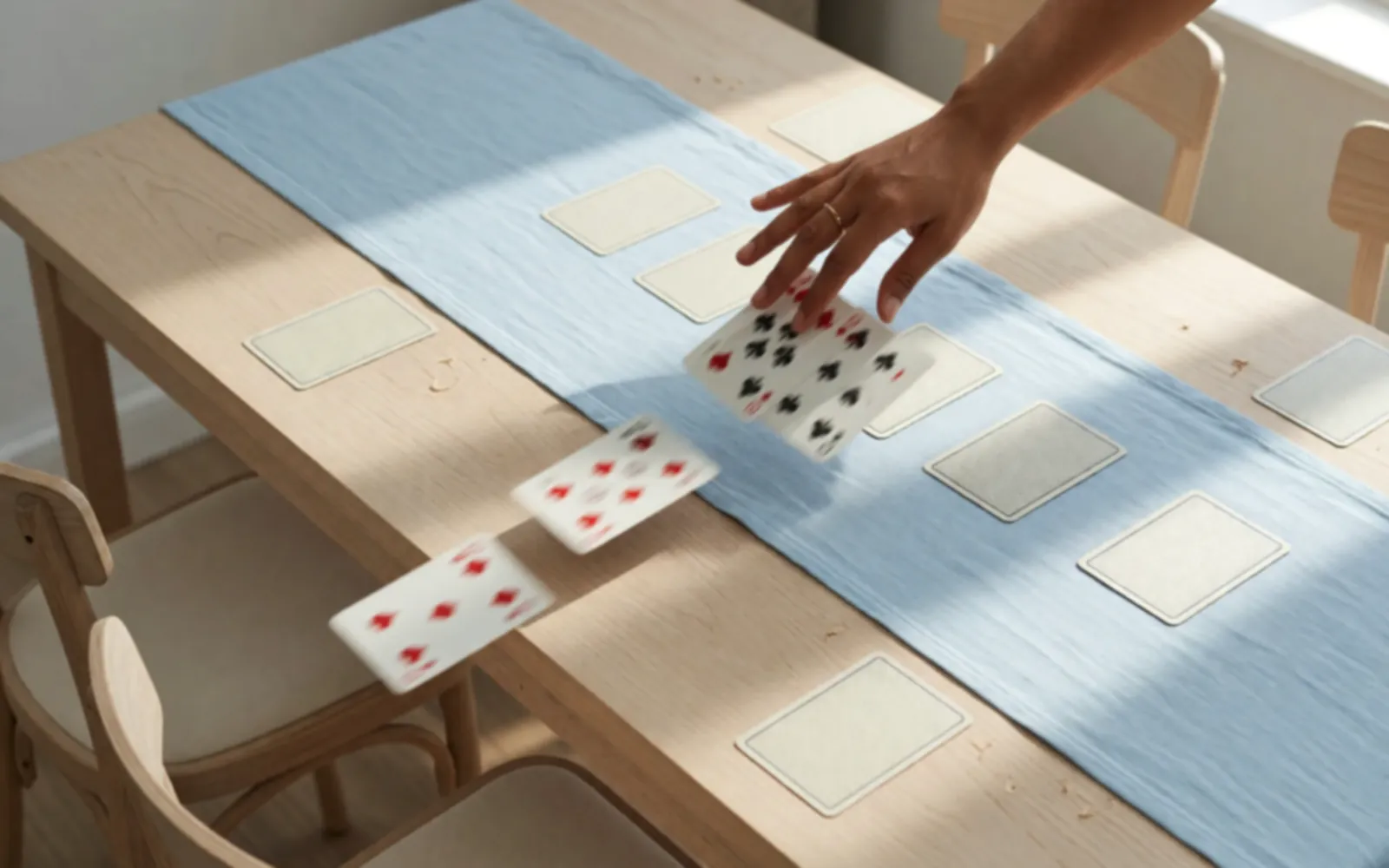
The counted path, and what fails if step three is skipped
Act one: take the open discard or one closed card. Those are the only legal pickup pair in classroom rummy. Act two: throw one card you will not keep. Act three: hold two sequences, one of them pure, with no joker standing inside that pure run. Act four: declare only when remaining cards sit in sets or further sequences.
If act three is skipped, act four is a failed show. Classroom cost is a penalty on leftover value, sometimes taught as a full count. jackpotbet's exact penalty is unpublished here. Read the ticket. Do not guess a rupee.
Pickup and discard are a pair, not two hobbies
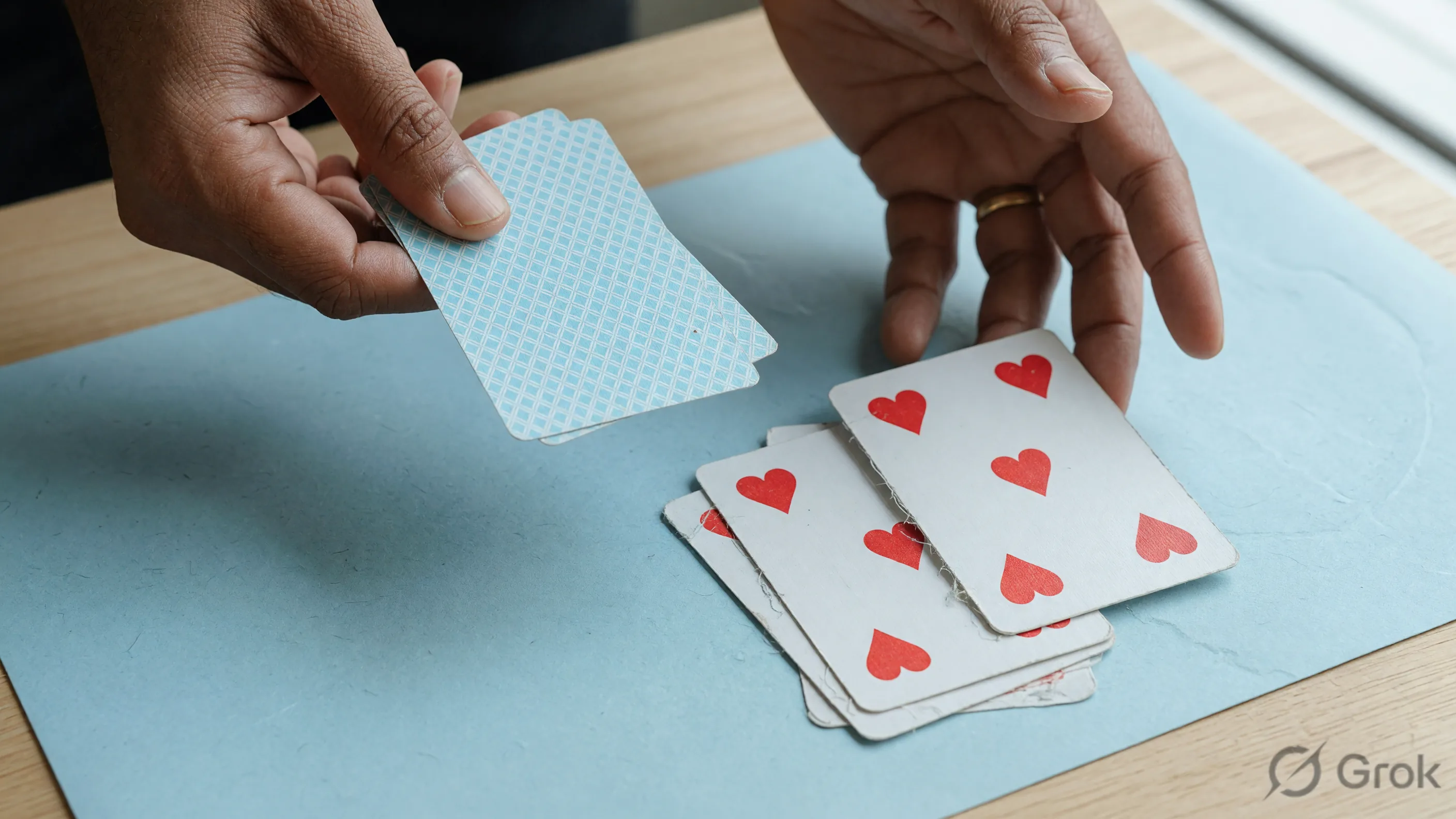
A player who draws and then freezes without discarding has not finished the turn. A player who discards the card that completed a pure run has undone the only life that cannot use a joker.
The open discard is public information. Taking it tells every other seat which rank you wanted. That is a skill cost. The closed card hides that signal and adds chance.
Two lives, then sets: the assembly order that survives a check
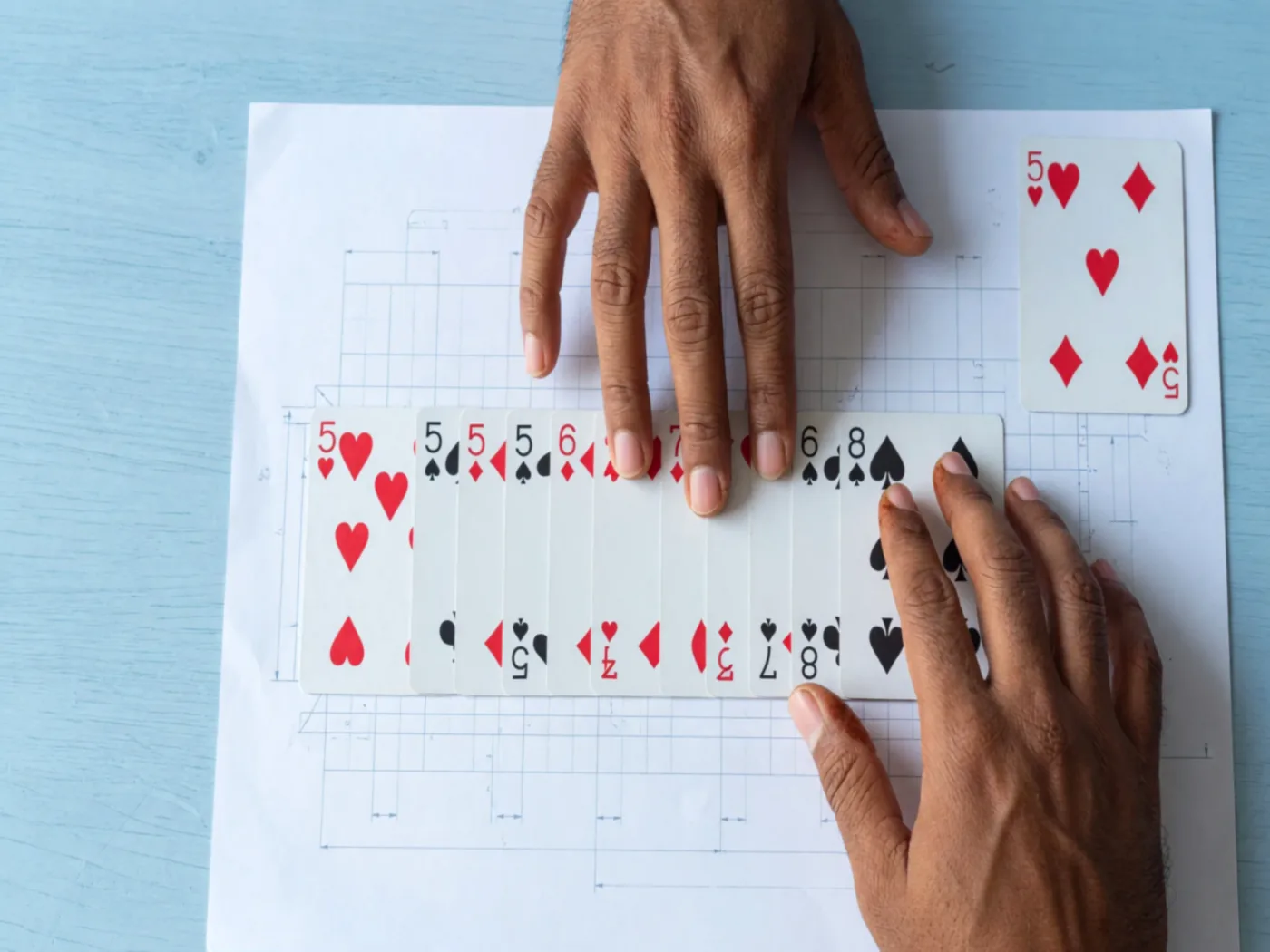
A life is a sequence of three or more consecutive cards in one suit. The first life must be pure. The second life may use a joker if the table allows wilds in that group. A set is three or four of one rank from different suits.
Assembling sets before the pure run is a common stall. The stall feels busy. It does not create the life the show test will ask for.
A valid show is groups on the cloth, not a victory pose
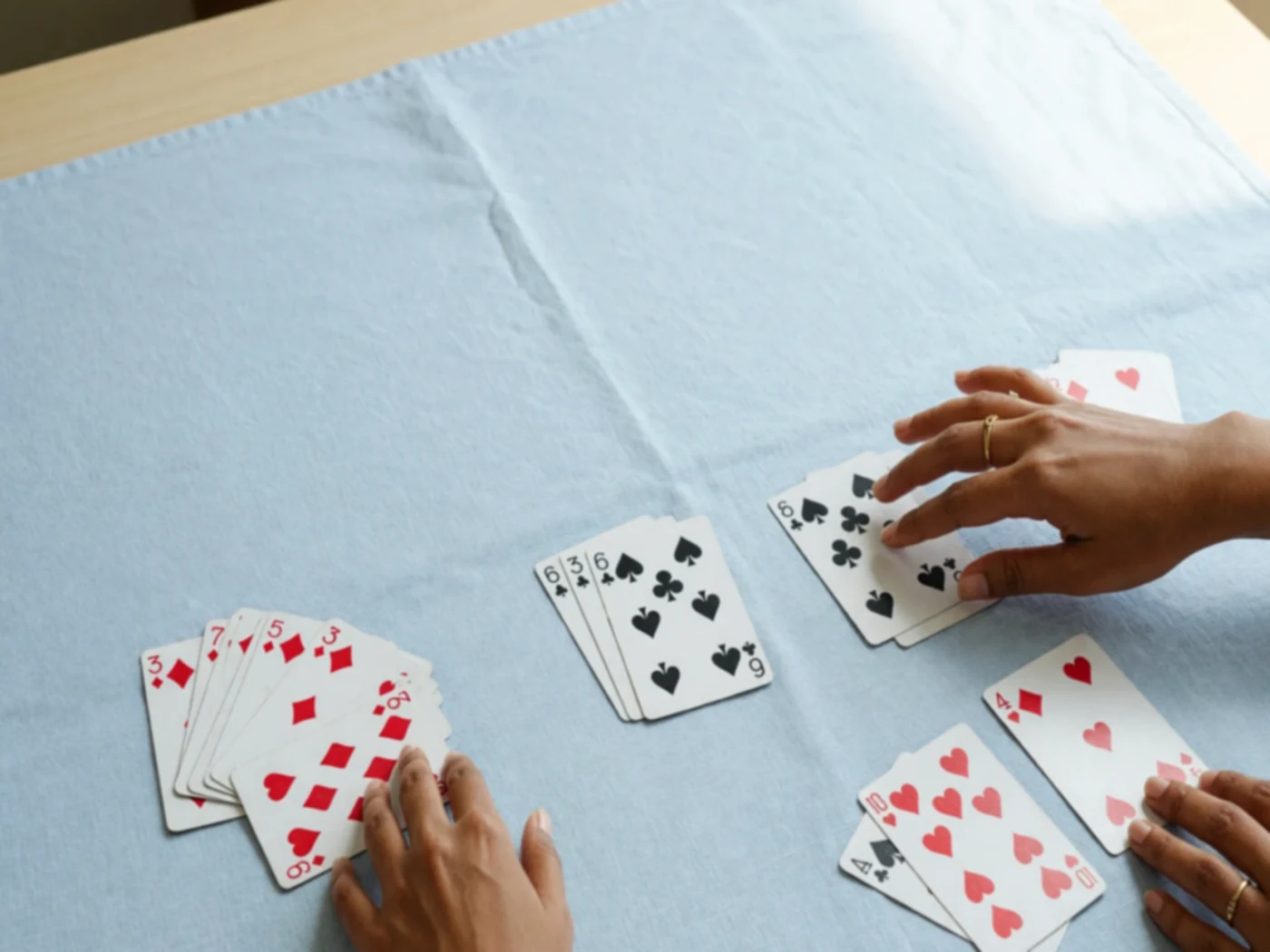
Lay distinct groups. Keep deadwood separate if the table still allows a show with leftover value in some teaching variants. Many 13-card tables require a complete arrangement with no loose cards. This desk cannot see jackpotbet's exact completeness rule. If the ticket says every card must sit in a group, treat a leftover 3 as a stop, not as a flourish.
Illegal shows you can name before you press anything
- No pure sequence, even if two dirty sequences look tidy.
- A sequence that uses a joker as if it were the first life.
- A set that repeats a suit when the table forbids duplicated suits in a set.
- A declaration made before the discard of the same turn.
- A show that uses a joker as a printed rank the table does not allow.
Each item is a classroom fail. Product software may catch some of them. Catching is not the same as teaching. Learn the fail before the timer asks you to hurry.
Mistakes that look like speed and cost a full count
Throwing a card that was the only connector in a near-pure run. Picking the open 7 because it matches a rank you already hold, then discovering it blocks the suit you needed. Declaring because the timer is red, not because the groups are complete.
Those errors are expensive on a Points clock. They are still expensive on Pool, only slower. Speed is not a third life.
Procedure is not a user-interface map
This walk does not describe jackpotbet icons, colours or menu trees. Those change without a press note we can cite. If a button is labelled Show, treat it as act four, not as a shortcut around act three.
Format trade-offs live on the table comparison. Do not paste that table into this walk. After you can name a pure run, go back and pick Points, Deals or Pool on purpose.
A dry run you can do with a physical deck tonight
Deal 13. Build one pure run. Build a second sequence. Group the rest. If you cannot, discard and draw from a closed remainder. Stop after ten minutes whether you finished or not. The stop is part of the practice.
If the physical dry run already feels like a chase, do not open a real-money seat. Use the control bench first.
What remains unpublished on how-to-play
A later primary file would change the unpublished lines around Four acts stand between a draw and a legal show. Until that file exists, the blank stays blank.
Standard 13-card teaching still asks for two sequences and one pure run. That teaching does not fill a stake ladder or an owner box.
If you can already name the next act, stop reading. A second pass should only happen when a dated note strikes a line.
Age under 18 and a restricted place remain closed seats even when a format clock is clear.
Commercial action, when you still want it, stays on the disclosed hop. Ordinary reading stays on the task you opened.
Correction marks will stay visible. Silent swaps after a complaint will not be how this desk edits.
A later primary file would change the unpublished lines around Four acts stand between a draw and a legal show. Until that file exists, the blank stays blank.
Standard 13-card teaching still asks for two sequences and one pure run. That teaching does not fill a stake ladder or an owner box.
If you can already name the next act, stop reading. A second pass should only happen when a dated note strikes a line.
Age under 18 and a restricted place remain closed seats even when a format clock is clear.
Commercial action, when you still want it, stays on the disclosed hop. Ordinary reading stays on the task you opened.
Correction marks will stay visible. Silent swaps after a complaint will not be how this desk edits.
A later primary file would change the unpublished lines around Four acts stand between a draw and a legal show. Until that file exists, the blank stays blank.
Standard 13-card teaching still asks for two sequences and one pure run. That teaching does not fill a stake ladder or an owner box.
If you can already name the next act, stop reading. A second pass should only happen when a dated note strikes a line.
Age under 18 and a restricted place remain closed seats even when a format clock is clear.
Commercial action, when you still want it, stays on the disclosed hop. Ordinary reading stays on the task you opened.
Correction marks will stay visible. Silent swaps after a complaint will not be how this desk edits.
A later primary file would change the unpublished lines around Four acts stand between a draw and a legal show. Until that file exists, the blank stays blank.
Standard 13-card teaching still asks for two sequences and one pure run. That teaching does not fill a stake ladder or an owner box.
If you can already name the next act, stop reading. A second pass should only happen when a dated note strikes a line.
Age under 18 and a restricted place remain closed seats even when a format clock is clear.
Commercial action, when you still want it, stays on the disclosed hop. Ordinary reading stays on the task you opened.
Correction marks will stay visible. Silent swaps after a complaint will not be how this desk edits.
A later primary file would change the unpublished lines around Four acts stand between a draw and a legal show. Until that file exists, the blank stays blank.
Standard 13-card teaching still asks for two sequences and one pure run. That teaching does not fill a stake ladder or an owner box.
If you can already name the next act, stop reading. A second pass should only happen when a dated note strikes a line.
Age under 18 and a restricted place remain closed seats even when a format clock is clear.
Show questions before the first live seat
What is a pure sequence in this teaching?
Three or more consecutive cards of one suit with no joker inside that group.
Does jackpotbet use a different show test?
Unknown on this desk. Confirm the ticket after login. The classroom test still prevents most accidental declarations.
Can I show with leftover cards?
Some teaching variants allow it. Many online tables do not. Read the completeness line on the product.
Open the first-hand still, then decide
If the four acts are clear, either sit a format you already chose or read the skill-versus-chance break. If act three is still fuzzy, stay here and run the physical deck once more.
Mark skill against chance. Return to format clocks.
PLAY NOW