Keeping the middle card cannot fix the closed deck
You hold a 6 of the same suit as a 4 and an 8 already on the table in your mind. Keeping the 6 might complete a run. Throwing it might cut a set someone else wants. That choice is skill.
What changed after you decide: nothing about the closed deck, the other private fans, or the order those cards were shuffled. Those stay chance. A method that claims to regularise them is advertising.
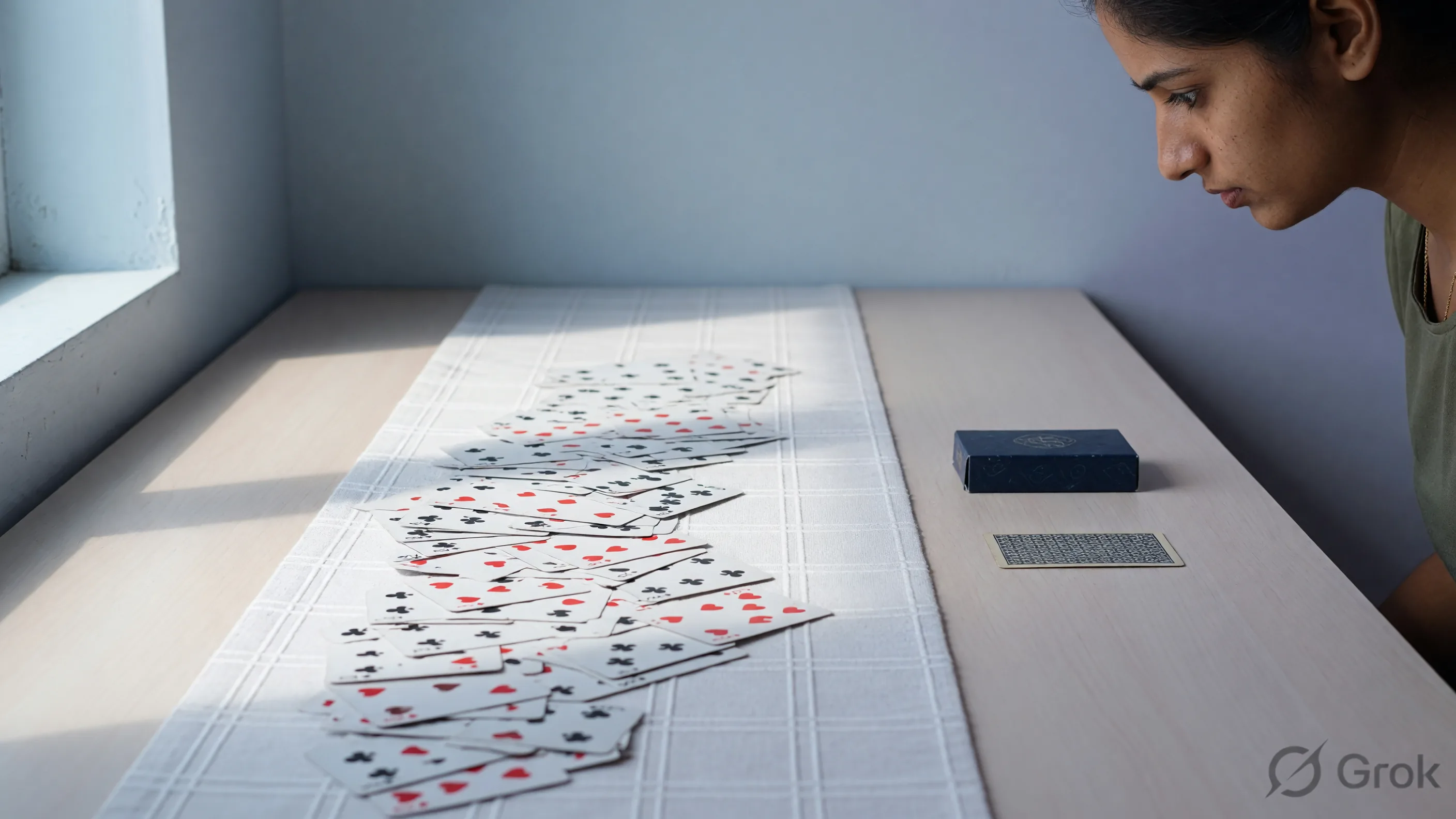
The middle-card scene, then the wall it hits
The useful question is not whether the 6 looks pretty. It is whether your first life already exists. If the pure run is missing, the 6 that might finish it outranks a speculative set. If the pure run already sits squared, the 6 is a connector you can afford to test against the discard's public signal.
Chapter break: legal choices on one side, unseen cards on the other
Skill includes: which card to throw, whether to take the open discard, when to stop hunting a third sequence, and whether to drop if the product offers a published drop. Chance includes: the next closed card, opponent holdings, and the deal order.
A drop, if present, is a published table option. This desk has no jackpotbet drop chart. If the ticket shows a first-drop value, that is a skill act only because you choose to take it. The value itself is not invented here.
Why players dress chance as a system
A closed card that completes a run feels like confirmation. It is a coincidence with a strong mood. The mood is not evidence that the next closed card will behave.
Kitchen tables reward stories. A cousin who 'always knows' is a family anecdote. It is not a rate. Transferring that anecdote onto a timed jackpotbet seat is the first category error.
Why a kitchen analogy fails on a timed seat
Kitchen rummy often has talk, tea and no countdown. A digital seat adds a timer and strangers who will not wait for a story. The analogy teaches arrangement. It does not teach the clock. That is the limit sentence: kitchen rummy is not a timed app seat.
If your plan requires other players to play slowly, the plan depends on chance in their habits. That is not a skill bound. It is a hope.
Deadwood is a judgment, not a personality trait
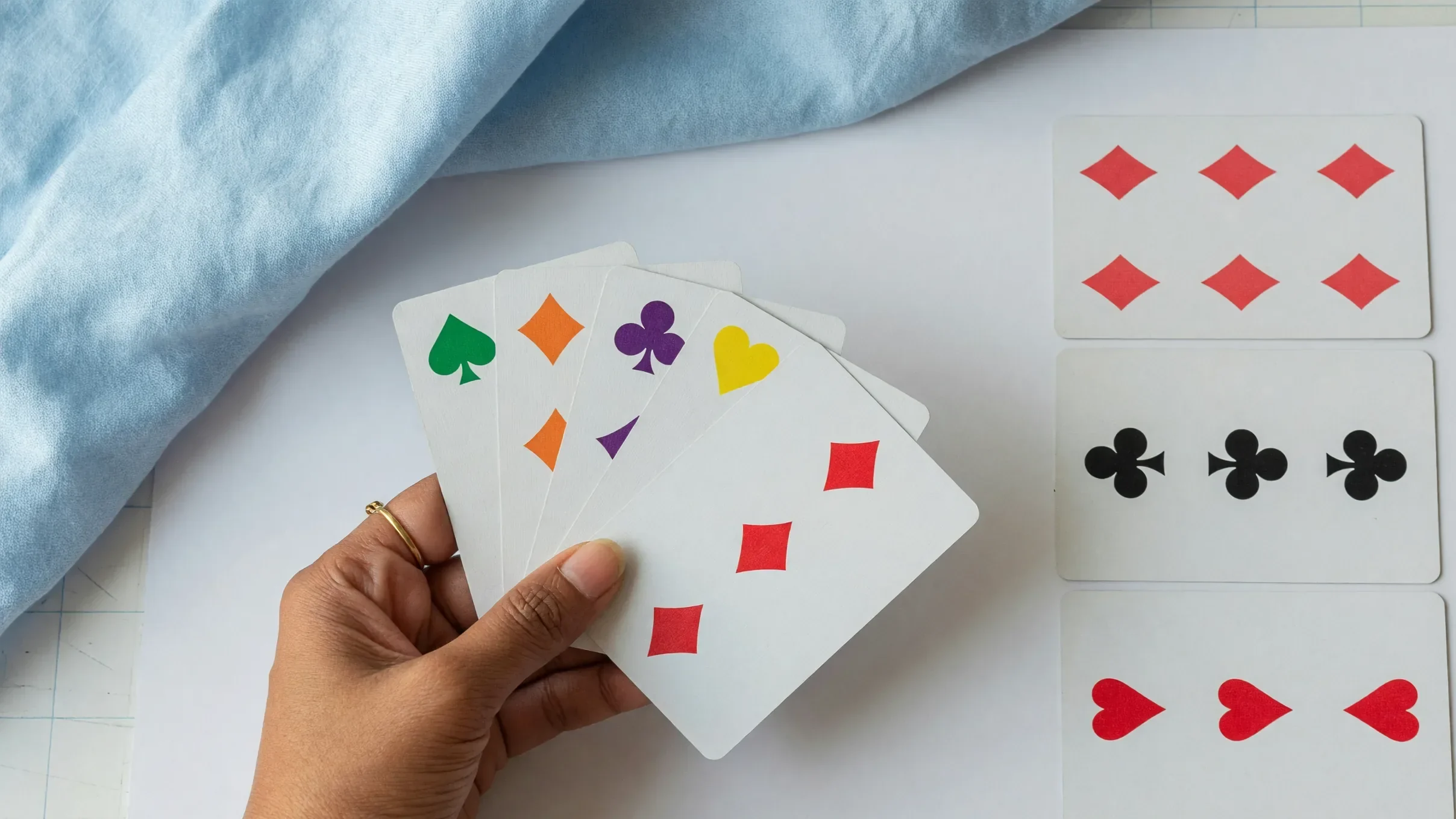
High leftover face cards taught as 10s dominate a failed-show total. Reducing those first is a skill preference when a show is near. Holding them because they 'might become a set' is a chance bet.
Count the unmatched fan out loud. If you cannot name the classroom total, you are not ready to declare.
A joker is a tool inside a dirty group, not a first life
Using a joker to complete a second sequence is ordinary teaching. Using a joker to fake the pure run is an illegal show. The card does not change category because it felt lucky.
If you were dealt two jokers, you still need the pure run in natural cards. Extra wilds do not retire that duty.
What would change this boundary
A primary jackpotbet file that lists drop values, timer seconds or auto-sort behaviour would let this desk describe those controls by name. Until that file exists, we describe choices, not toggles.
No historical winning rate is cited here because none was supplied. Do not fill the silence with a forum screenshot.
When the next seat no longer fits the session you set
If the keep-or-throw decision is now a chase to recover a prior leftover total, the session has changed job. Return to the control bench. Format comparison can wait.
Skill notes do not argue you into a second PLAY NOW. They argue you into a clearer first one, or into a stop.
What remains unpublished on strategy
A later primary file would change the unpublished lines around Keeping the middle card cannot fix the closed deck. Until that file exists, the blank stays blank.
Standard 13-card teaching still asks for two sequences and one pure run. That teaching does not fill a stake ladder or an owner box.
If you can already name the next act, stop reading. A second pass should only happen when a dated note strikes a line.
Age under 18 and a restricted place remain closed seats even when a format clock is clear.
Commercial action, when you still want it, stays on the disclosed hop. Ordinary reading stays on the task you opened.
Correction marks will stay visible. Silent swaps after a complaint will not be how this desk edits.
A later primary file would change the unpublished lines around Keeping the middle card cannot fix the closed deck. Until that file exists, the blank stays blank.
Standard 13-card teaching still asks for two sequences and one pure run. That teaching does not fill a stake ladder or an owner box.
If you can already name the next act, stop reading. A second pass should only happen when a dated note strikes a line.
Age under 18 and a restricted place remain closed seats even when a format clock is clear.
Commercial action, when you still want it, stays on the disclosed hop. Ordinary reading stays on the task you opened.
Correction marks will stay visible. Silent swaps after a complaint will not be how this desk edits.
A later primary file would change the unpublished lines around Keeping the middle card cannot fix the closed deck. Until that file exists, the blank stays blank.
Standard 13-card teaching still asks for two sequences and one pure run. That teaching does not fill a stake ladder or an owner box.
If you can already name the next act, stop reading. A second pass should only happen when a dated note strikes a line.
Age under 18 and a restricted place remain closed seats even when a format clock is clear.
Commercial action, when you still want it, stays on the disclosed hop. Ordinary reading stays on the task you opened.
Correction marks will stay visible. Silent swaps after a complaint will not be how this desk edits.
A later primary file would change the unpublished lines around Keeping the middle card cannot fix the closed deck. Until that file exists, the blank stays blank.
Standard 13-card teaching still asks for two sequences and one pure run. That teaching does not fill a stake ladder or an owner box.
If you can already name the next act, stop reading. A second pass should only happen when a dated note strikes a line.
Age under 18 and a restricted place remain closed seats even when a format clock is clear.
Commercial action, when you still want it, stays on the disclosed hop. Ordinary reading stays on the task you opened.
Correction marks will stay visible. Silent swaps after a complaint will not be how this desk edits.
A later primary file would change the unpublished lines around Keeping the middle card cannot fix the closed deck. Until that file exists, the blank stays blank.
Standard 13-card teaching still asks for two sequences and one pure run. That teaching does not fill a stake ladder or an owner box.
If you can already name the next act, stop reading. A second pass should only happen when a dated note strikes a line.
Age under 18 and a restricted place remain closed seats even when a format clock is clear.
Commercial action, when you still want it, stays on the disclosed hop. Ordinary reading stays on the task you opened.
Correction marks will stay visible. Silent swaps after a complaint will not be how this desk edits.
A later primary file would change the unpublished lines around Keeping the middle card cannot fix the closed deck. Until that file exists, the blank stays blank.
Standard 13-card teaching still asks for two sequences and one pure run. That teaching does not fill a stake ladder or an owner box.
If you can already name the next act, stop reading. A second pass should only happen when a dated note strikes a line.
Age under 18 and a restricted place remain closed seats even when a format clock is clear.
Commercial action, when you still want it, stays on the disclosed hop. Ordinary reading stays on the task you opened.
Boundary questions after the chapter break
Is there a jackpotbet winning system on this desk?
No. Arrangement choices are skill. Unseen cards stay chance.
Is dropping a skill act?
Only if the product publishes a drop and you choose it. We have no drop chart to quote.
Does a joker replace the pure sequence?
Not in standard 13-card teaching.
Read the break, then limit or leave
If you can mark skill against chance without dressing the stock as a method, either set a session stop or return to the format clocks.
Use the control bench. Pick a scoring clock.
PLAY NOW